How to measure your website traffic in an easy way
Tracking and understanding how users interact with your website is crucial for online success. Whether you run a small blog or a large eCommerce store, knowing how to measure your website traffic helps you make smarter marketing decisions, improve engagement, and optimize conversions.
In today’s fast-paced digital world, accurate website analytics are more accessible than ever. With the right mix of free tools, data interpretation, and smart strategies, you can easily uncover what’s working — and what’s not — on your website.
Let’s explore six powerful, easy-to-implement ways to measure and analyze your website traffic in 2025.
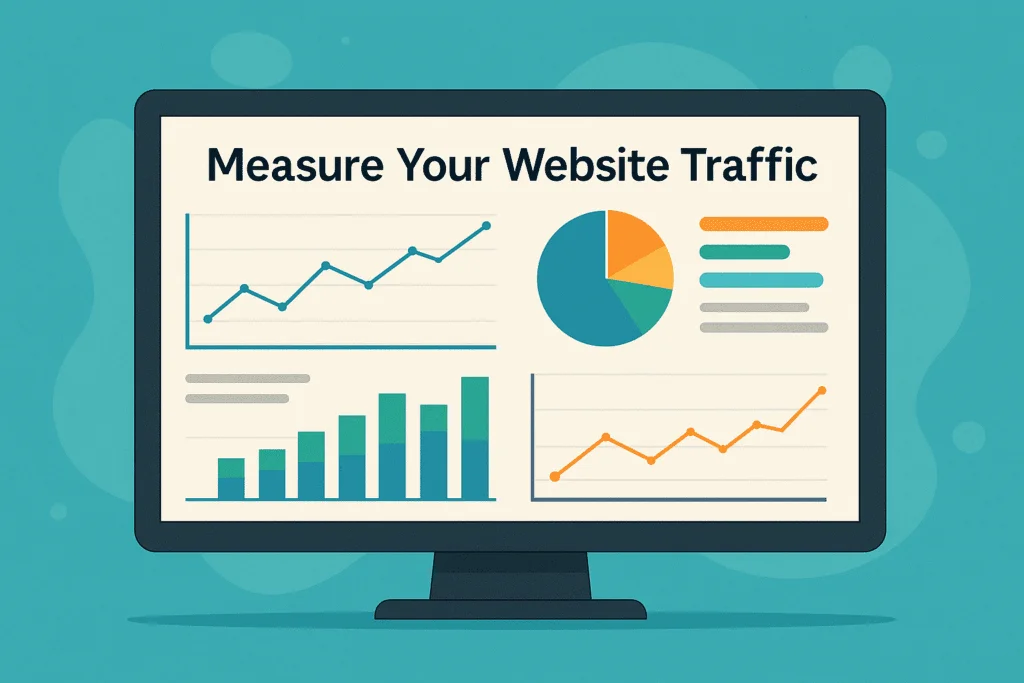


Understanding the Importance of Measuring Website Traffic
Before diving into tools, it’s vital to understand why measuring website traffic matters. Your website’s visitors are a reflection of your brand reach, engagement, and authority. Monitoring traffic lets you answer key business questions such as:
How many people visit your site daily or monthly?
Which pages attract the most attention?
What devices and countries bring the most visitors?
How long do users stay, and what content keeps them engaged?
According to industry experts, websites that consistently measure their website traffic and adjust strategies see up to 45% higher conversion rates than those that rely on assumptions.
Tracking traffic also helps identify bottlenecks, such as high bounce rates or poor mobile performance. Using insights from tools like Social Media Traffic can further guide how to attract qualified visitors from platforms like Facebook, Instagram, or LinkedIn.
Using Google Analytics 4 (GA4) for Smart Traffic Insights
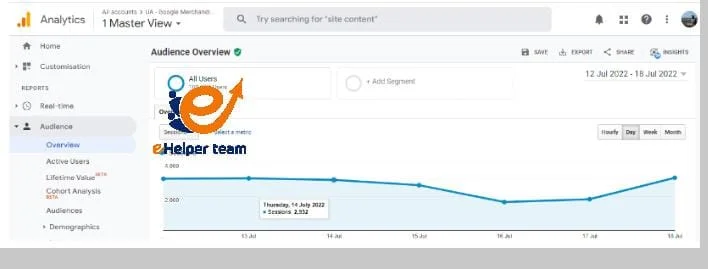
The backbone of measuring your online success is Google Analytics 4 (GA4). It’s not just a traffic counter — it’s a complete data ecosystem that provides detailed insights into how users interact with your website.
GA4 helps you:
Track visitors in real time.
Identify your best-performing landing pages.
Understand user journeys across multiple devices.
Monitor engagement metrics like session duration and event counts.
To measure your website traffic effectively in 2025, configure GA4 with event-based tracking, which provides deeper insights than traditional Universal Analytics. You can integrate Google Tag Manager (GTM) to track form submissions, clicks, and conversions seamlessly. Additionally, A/B testing can help you optimize your eCommerce site by testing different variations and improving conversion rates.
Leveraging Social Media Analytics to Boost Traffic Understanding
Social media remains one of the largest sources of referral traffic. Platforms like Facebook, Instagram, LinkedIn, and TikTok offer their own analytics dashboards that provide valuable insights into engagement and audience behavior.
Here’s how you can use them to measure your website traffic:
Track link clicks in your posts or ads.
Monitor audience demographics (age, gender, location).
Analyze conversion rates from social platforms to your site.
Measure engagement trends to optimize future campaigns.
Combining this with GA4 data gives you a full-funnel view of how social visitors behave on your site. A great reference is the article Facebook ad metrics, which breaks down key ad metrics to interpret ROI accurately.
Using SEO Tools to Track Organic Traffic and Keyword Performance
Your organic traffic — the visitors arriving from search engines — is a major performance indicator. Tools like Google Search Console, Ahrefs, and SEMrush can help you monitor your keyword rankings and search impressions.
To effectively measure your website traffic from organic sources:
Track the top queries bringing users to your site.
Identify your most clicked URLs.
Monitor Core Web Vitals (speed, interactivity, and layout shifts).
Analyze the performance of new blog posts or landing pages.
Search Console’s “Performance” tab shows how many impressions and clicks your pages get from Google results, helping you align your content strategy with audience demand. For local businesses, Boosting Local Success: The Ultimate Guide to Website Design for Local Businesses offers excellent insights on optimizing for local search.
Evaluating User Engagement Through Behavior Metrics
Traffic numbers alone don’t tell the full story. You need to know what users do once they land on your website. Engagement metrics reveal how visitors interact with your content and help identify areas for improvement.
Key engagement metrics include:
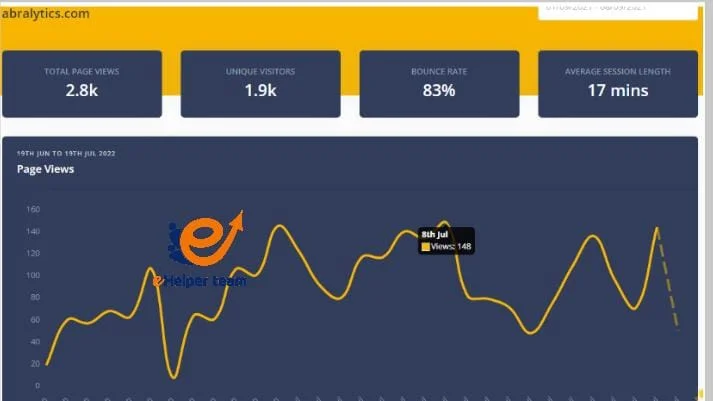
Bounce Rate: Percentage of visitors leaving after one page.
Average Session Duration: How long visitors stay.
Pages per Session: The number of pages viewed per visit.
Click-through Rate (CTR): How often users click on your links.
By combining these insights, you can measure your website traffic quality — not just quantity. For example, a high bounce rate might signal slow loading times or irrelevant content.
Experiment with layout and CTA placements through controlled experiments. Reference Welcome Email Sequence Ecommerce That Converts, which explains how personalized engagement drives retention and repeat visits.
Using Heatmaps and Session Recording Tools for Deeper Analysis
Heatmaps are visual analytics tools that show where users click, scroll, and spend the most time. They give you a “bird’s eye view” of how users behave on your website — beyond just numbers.
Popular tools include Hotjar, Crazy Egg, and Microsoft Clarity.
They help you:
Identify the most engaging areas of your pages.
Detect where visitors drop off in conversion funnels.
Optimize layouts for better user experience.
In 2025, integrating heatmaps with your analytics platform allows you to measure your website traffic behaviorally, leading to smarter UX and higher conversions.
You can also link session recordings with GA4 data to identify friction points, giving you both quantitative and qualitative insights for better decision-making.
Making Data-Driven Decisions for Continuous Growth
Collecting data is just the first step; acting on it makes the difference.
To truly benefit from efforts to measure your website traffic, you must interpret data and use it to improve marketing strategies, design, and user experience.
Here’s how:
Prioritize content that attracts high engagement.
Adjust your SEO strategy based on organic performance.
Use conversion tracking to refine ad budgets.
Set quarterly benchmarks to track improvements.
Modern analytics tools can even use AI predictions to estimate future visitor trends, giving you a competitive edge in 2025.
When you continuously refine your approach, your website becomes not just a digital presence but a data-driven growth engine.
FAQs About Measuring Website Traffic
1. What’s the easiest way to measure website traffic?
Use Google Analytics 4 (GA4) — it’s free, comprehensive, and integrates with most platforms.
2. How often should I check my website traffic?
Weekly monitoring is ideal. Monthly reports help analyze long-term trends.
3. What’s the difference between traffic and engagement?
Traffic measures how many people visit; engagement measures what they do once there.
4. Can I track individual user journeys?
Yes. Tools like Hotjar or GA4’s “Explore” mode allow event-based tracking for user flows.
5. Which traffic source is most valuable?
Organic traffic is typically the most sustainable, followed by referrals and social media.
Conclusion
In 2025, measuring your website traffic isn’t just about numbers — it’s about understanding behavior, intent, and performance.
From Google Analytics 4 to heatmaps and social analytics, every tool gives you a clearer picture of how your site performs and where to improve.
By following these strategies, you’ll not only measure your website traffic accurately but also turn insights into growth, engagement, and long-term online success.